Perimenopause Weight Gain: What’s Normal, What Helps
Many women are surprised to learn that weight changes often begin during perimenopause — years before menopause itself. If you’re noticing your body changing while your periods are still happening (even if irregularly), this is a genuinely common pattern, not a sign that something unusual is happening to you specifically.
What is perimenopause?
Perimenopause is the transitional period leading up to menopause, when hormone levels — particularly estrogen — begin to fluctuate and periods become irregular. This stage can begin in your late 30s or 40s and typically lasts several years before reaching menopause itself, which is officially marked by 12 consecutive months without a period.
Because hormone levels fluctuate rather than decline steadily during perimenopause (unlike the more consistent lower levels of postmenopause), symptoms — including weight-related changes — can feel less predictable during this stage than during menopause itself.
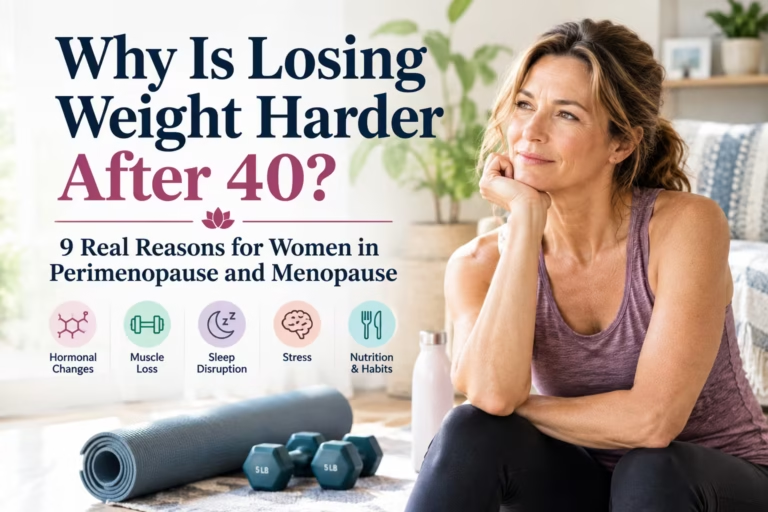
Why weight gain often starts here, not later
According to Mayo Clinic, weight gain frequently starts a few years before menopause, during perimenopause, and continues at a rate of roughly 1.5 pounds a year through a woman’s 50s. This means many women experience the beginning of these changes well before they’d describe themselves as “in menopause.”
Contributing factors during perimenopause specifically include:
- Fluctuating estrogen, which is linked to changes in fat distribution even before levels settle into the lower, more stable pattern of postmenopause
- Early changes in muscle mass, which can begin during this transitional window
- Sleep disruption, which for many women starts during perimenopause due to early hot flashes or night sweats, well before full menopause
- The ordinary effects of aging — reduced activity, busier life circumstances — happening at the same time as these hormonal shifts, making it hard to separate one cause from another
How perimenopause weight gain differs from menopause weight gain
The underlying mechanisms are similar, but perimenopause weight gain tends to be:
- Less predictable, since hormone levels are fluctuating rather than settled
- Easier to dismiss or misattribute, since many women don’t associate irregular-but-present periods with “menopause-related” changes
- An earlier opportunity to build sustainable habits, before the more consistent hormonal changes of full menopause set in
What to do about it now
The good news is that the same evidence-based strategies covered throughout our complete guide apply during perimenopause just as much as during menopause itself:
- Prioritize protein to support muscle maintenance as this natural decline begins
- Add strength training if you haven’t already — starting during perimenopause means you’re building this habit before the changes become more pronounced
- Pay attention to sleep, especially if hot flashes or night sweats are starting to appear, even irregularly
- Build sustainable nutrition habits rather than waiting for “full menopause” to make changes — there’s no need to wait
Addressing these areas during perimenopause, rather than waiting until symptoms feel more disruptive, tends to make the transition through menopause and into postmenopause more manageable.
When to talk to a doctor
Perimenopause symptoms vary widely, and it’s worth talking to your doctor if:
- Weight changes feel sudden or significant
- Periods become very irregular, unusually heavy, or otherwise concerning
- Sleep disruption or mood changes are significantly affecting your daily life
- You want to discuss whether hormone therapy or other options are appropriate for your specific symptoms
A doctor can also help confirm whether what you’re experiencing is consistent with typical perimenopause or warrants further investigation for another cause.
FAQ
How do I know if I’m in perimenopause? Common signs include irregular periods, changes in flow, hot flashes, sleep disruption, and mood changes — though experiences vary widely. A doctor can help confirm what stage you’re in based on your symptoms and history.
Can perimenopause weight gain be prevented entirely? Not necessarily entirely, since some of the underlying hormonal changes are a normal part of this life stage — but the degree and pace of weight and body composition change can often be influenced meaningfully through nutrition, strength training, sleep, and consistency.
Is it normal to gain weight in perimenopause even with no diet changes? Yes, this is a commonly reported experience, and it has a real physiological basis related to hormonal fluctuation, gradual muscle loss, and sleep changes — not necessarily anything you’re doing differently.
How long does perimenopause typically last? It varies by individual, but perimenopause commonly lasts several years before reaching menopause (12 months without a period), which occurs at an average age of 51 in the U.S.
Related reading: Menopause Weight Loss: The Complete Guide · Weight Loss After 50: Complete Guide · Menopause and Sleep · Menopause Nutrition Guide