
Menopause Weight Loss: The Complete Guide for Women 40+
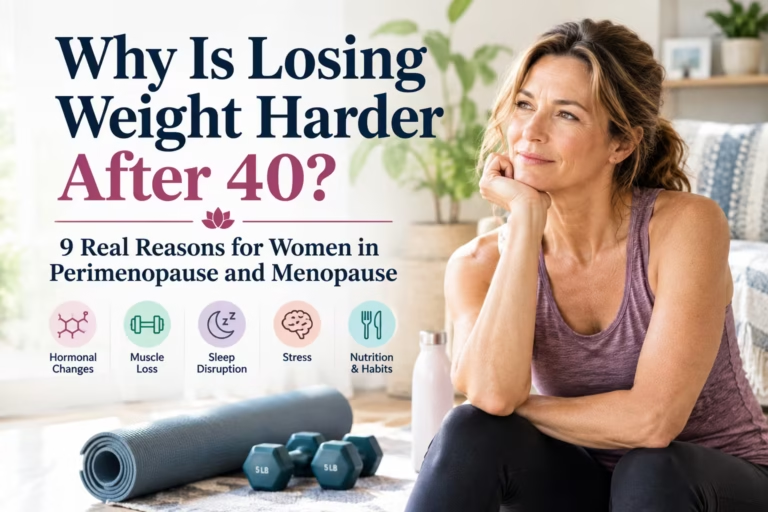
If you’ve reached your 40s or 50s and suddenly feel like the strategies that used to work for your weight don’t work the same way anymore, you’re not imagining it, and you’re not alone. Many women notice that the eating and exercise habits that kept their weight steady for years stop delivering the same results around perimenopause — often while nothing else about their routine has changed.
That shift isn’t a personal failure. It’s the result of real, well-documented hormonal and physical changes that happen during the menopause transition, layered on top of the ordinary effects of aging: gradual muscle loss, shifting sleep patterns, and busier, more sedentary lives.
This guide brings together what’s actually known about menopause and weight — the hormonal biology, the practical nutrition and exercise strategies, and the everyday habits that tend to matter most — into one resource you can come back to. It won’t promise a hormone “reset” or a number of pounds by a certain date, because no honest resource can. What it will do is help you understand what’s happening in your body and give you a realistic, sustainable place to start.
Quick Answer: What You Need to Know
- Why it’s harder now: Declining estrogen during perimenopause and menopause is linked to a shift in where fat is stored (more around the belly) and works alongside age-related muscle loss to slow your resting metabolism — even if your habits haven’t changed.
- What actually matters most: Adequate protein, regular strength training, consistent sleep, and manageable stress — more than any single “menopause diet” or food to eliminate.
- What to prioritize: Muscle preservation (via protein + resistance training), a sustainable eating pattern you can keep for years, and daily movement — in that order.
- What to avoid: Very low-calorie crash diets, cutting out entire food groups without a reason, all-or-nothing thinking, and chasing “hormone-balancing” products with no real evidence behind them.
- Where to start: Pick one or two small, specific changes (like a protein target at breakfast and two strength sessions a week) rather than overhauling everything on day one.
- The honest truth: Some weight and body-composition change during this life stage is common and partly biological. That doesn’t mean you have no influence over it — it means the goal is steady, sustainable progress rather than a quick fix.
What Happens to Weight During Perimenopause and Menopause?
It helps to separate the stages, since they’re often used loosely:
- Perimenopause is the transitional years leading up to menopause, when hormone levels — especially estrogen — begin to fluctuate and periods become irregular. This can start in your late 30s or 40s and last several years. Our perimenopause weight gain guide goes deeper into this stage specifically.
- Menopause is a single point in time, officially reached after 12 months without a menstrual period. In the U.S., the average age is 51.
- Postmenopause refers to all the years after that point, when estrogen remains consistently lower.
Weight changes often start before menopause itself, during perimenopause. According to Mayo Clinic, weight gain during this transition commonly continues at a rate of roughly 1.5 pounds a year through a woman’s 50s — a slow, gradual drift rather than a sudden shift.
Several things are happening at once during this window:
- Fat distribution changes. Lower estrogen is associated with fat shifting from the hips and thighs toward the abdomen, which is why “menopause belly” is such a widely recognized experience — see our dedicated guide to menopause belly fat.
- Muscle mass naturally declines with age, a process that tends to accelerate around the menopause transition. Less muscle means a lower resting metabolic rate, since muscle tissue burns more calories at rest than fat tissue.
- Sleep is frequently disrupted by night sweats, hot flashes, or general changes in sleep architecture, which can affect appetite regulation and next-day energy for activity — more on this in our menopause and sleep guide.
- Appetite and hunger cues can shift, partly related to hormonal changes that influence hunger and fullness signaling.
- Activity levels often decline for entirely ordinary reasons — busier caregiving responsibilities, joint discomfort, fatigue, or simply less time — which compounds the metabolic changes above.
None of these factors act alone. Mayo Clinic is explicit that hormonal changes alone don’t fully explain menopausal weight gain — genetics, sleep, and lifestyle patterns all play a role too. That’s actually useful news: it means there are multiple points where small, sustainable changes can help.
Why Weight Loss Can Feel Different After 40
If weight loss feels harder now than it did in your 20s or 30s, several things are usually happening together rather than one single cause:
Muscle mass. Less lean muscle means your body burns somewhat fewer calories at rest than it used to, even at the same body weight.
Activity patterns. Life often gets busier and more sedentary in midlife — more time at a desk, more caregiving, less incidental movement — which reduces daily calorie burn in ways that are easy to miss.
Sleep. Poor or disrupted sleep is associated with increased snacking, higher calorie intake, and reduced activity the next day, according to Mayo Clinic.
Stress. Ongoing stress can affect eating patterns and energy for exercise, even without a direct “stress hormone causes fat” mechanism being the whole story.
Hormonal shifts. Declining estrogen is linked to changes in fat distribution and insulin sensitivity, which can make abdominal fat gain more likely even without a change in total body weight.
Normal aging. Metabolism gradually slows with age in general, independent of menopause specifically — our weight loss after 50 guide covers this broader picture in more depth.
The honest takeaway: there’s rarely one single explanation, and there’s rarely one single fix. That’s exactly why fad “hormone reset” diets that promise a single-cause solution tend to disappoint — the reality is more layered, and more workable, than that.
Menopause Weight Gain vs. Fat Gain
The number on the scale is one of the least useful ways to track progress during this life stage, and here’s why.
“Weight” includes several different things that change independently:
| What it measures | What can move it day to day |
|---|---|
| Body fat | Long-term calorie balance, activity level |
| Lean muscle mass | Strength training, protein intake, aging |
| Water weight | Sodium intake, hormonal fluctuations, hydration, time of month |
| Digestive contents | What and when you last ate |
This matters especially during menopause because it’s possible to lose fat and gain muscle at the same time — which can mean the scale barely moves even though your body composition, clothing fit, and metabolic health are genuinely improving. It’s also possible for water retention tied to hormonal fluctuation to mask real fat loss for days or weeks at a time.
If you only track the scale, both of these very normal patterns can look like “nothing is working” when something actually is. Other markers — how your clothes fit, waist circumference, energy levels, strength gains in the gym, and how you feel — often tell a more complete story than the scale alone.
Menopause Belly Fat
Abdominal fat gain is one of the most commonly reported changes during the menopause transition, and it has a real physiological basis: as estrogen declines, fat storage tends to shift away from the hips and thighs and toward the abdomen.
A few things worth understanding clearly:
- Spot reduction isn’t realistic. No exercise, food, or supplement can direct fat loss specifically to the belly. Ab workouts build ab muscle — they don’t selectively burn fat over that muscle.
- This isn’t purely cosmetic. Abdominal fat, particularly visceral fat stored around internal organs, is associated with increased cardiovascular and metabolic risk, which is one reason this topic deserves real attention rather than being treated as an appearance issue alone.
- What actually helps is the same as what helps overall body composition: a sustainable eating pattern, adequate protein, regular strength training, and consistent movement — approached as a long-term pattern, not a short-term “belly fat fix.”
If you’re seeing more of your weight settle around your midsection than it used to, that’s a recognized, common pattern during this life stage — not a sign you’re doing something wrong. Our full guide to menopause belly fat covers the physiology and realistic strategies in more depth.
Nutrition for Menopause Weight Management
There’s no single “menopause diet” backed by strong evidence as uniquely superior. What’s better supported is a small set of nutrition principles that tend to matter more during this life stage specifically. (For a deeper dive into all of this, including micronutrients like calcium and vitamin D, see our complete menopause nutrition guide.)
Protein
Protein needs may increase somewhat as we age. General guidance for adults is roughly 0.8 g/kg of body weight, but Mayo Clinic Press notes many postmenopausal women benefit from closer to 1.0–1.2 g per kilogram of body weight per day, spread across meals, to help support muscle maintenance and satiety. (For context, a 150-lb/68-kg woman would be looking at roughly 68–82 grams a day at that range — always confirm what’s right for you with a doctor or dietitian if you have kidney disease or another condition that affects protein needs.)
Fiber
Fiber supports digestion, steadier blood sugar, and fullness after meals. Good sources include vegetables, fruit with the skin on, legumes, oats, and whole grains.
Fruits and vegetables
Aim for variety and color rather than any single “superfood.” A mix of leafy greens, cruciferous vegetables (broccoli, cauliflower), berries, and other fruits provides fiber, micronutrients, and volume that supports fullness without excess calories.
Whole grains and minimally processed carbohydrates
Carbohydrates aren’t the enemy — the type and portion matter more than eliminating them. Oats, brown rice, quinoa, and whole-grain bread provide fiber and steadier energy than heavily refined versions of the same foods.
Healthy fats
Olive oil, avocado, nuts, seeds, and fatty fish provide fats that support satiety and overall health. There’s no need to go very low-fat or very high-fat — a moderate, whole-food-based approach works for most people.
Hydration
Adequate water supports energy, digestion, and can help distinguish true hunger from thirst. A practical habit: drink a glass of water before meals and keep a water bottle visible during the day.
Portion awareness
You don’t need to weigh and log every gram of food to manage portions. Simple tools — a flat hand for protein portions, a cupped hand for carbs, a thumb for fats — work well for many people without the burnout that strict calorie tracking can cause.
Highly processed foods
These aren’t “forbidden,” but they tend to be easy to overeat and lower in the nutrients (protein, fiber) that support fullness. The goal is building a diet where minimally processed foods make up most of what you eat most of the time — not perfection.
What Should You Eat During Menopause?
Rather than a rigid meal plan, think in terms of categories you build meals from:
| Category | Examples |
|---|---|
| Protein-rich foods | Eggs, Greek yogurt, cottage cheese, chicken, turkey, fish, tofu, tempeh, legumes, protein powder |
| Vegetables | Leafy greens, broccoli, peppers, zucchini, carrots, tomatoes |
| Fruits | Berries, apples, citrus, pears, melon |
| Whole grains | Oats, quinoa, brown rice, whole-grain bread or pasta |
| Legumes | Lentils, chickpeas, black beans, edamame |
| Healthy fats | Olive oil, avocado, nuts, seeds, nut butter |
| Calcium-rich foods | Dairy or fortified plant milk, yogurt, leafy greens, canned salmon with bones |
| Convenient options | Rotisserie chicken, canned tuna/salmon, pre-washed salad kits, frozen vegetables, Greek yogurt cups |
No individual food will “balance your hormones” or melt fat on its own — the pattern over weeks and months is what matters, not any single ingredient. For a full shopping list built from these categories, see our menopause grocery list.
Menopause Meal Planning
A simple formula makes building balanced meals easier without tracking every gram:
Protein + Vegetables/Fruit + High-Fiber Carbohydrate + Healthy Fat
Breakfast examples
- Greek yogurt with berries, a drizzle of honey, and a sprinkle of nuts
- Two eggs with spinach and whole-grain toast, half an avocado
- Protein smoothie with fruit, spinach, and a spoonful of nut butter
(For more, see our high-protein breakfast roundup.)
Lunch examples
- Grilled chicken salad with mixed greens, chickpeas, and olive oil vinaigrette
- Turkey and hummus whole-grain wrap with vegetables
- Leftover salmon with quinoa and roasted vegetables
Dinner examples
- Baked fish, a large portion of roasted vegetables, and brown rice
- Stir-fried tofu or chicken with vegetables over quinoa
- Turkey chili with beans, topped with a little cheese and avocado
Snack examples
- Apple with peanut butter
- Cottage cheese with berries
- A handful of nuts and a piece of fruit
- Hard-boiled eggs
(See our full healthy snacks for women over 40 list for more ideas.)
Want a full week planned out for you? See our 7-day menopause meal plan, or browse our collection of menopause-friendly recipes for more variety.
Exercise and Menopause Weight Management
You don’t need punishing workouts to support your health during menopause — consistency matters far more than intensity.
Walking is one of the most underrated tools available: it’s accessible, low-impact, and easy to build into daily life. The CDC recommends adults get at least 150 minutes of moderate-intensity activity a week (roughly 30 minutes, five days a week), and brisk walking counts fully toward that goal.
Resistance/strength training deserves particular attention during this life stage. Because muscle mass naturally declines with age — a process that can accelerate around menopause — strength training helps preserve the muscle that keeps your resting metabolism higher and supports functional strength, balance, and bone health. The CDC recommends muscle-strengthening activity that works all major muscle groups on at least 2 days a week. See our dedicated strength training for women over 50 guide for a beginner routine.
Cardio beyond walking (cycling, swimming, dancing, elliptical) supports heart health and can be layered in based on preference and joint comfort.
Mobility and flexibility work — gentle stretching, yoga, or dedicated mobility sessions — supports joint comfort and can make strength and cardio sessions more comfortable and sustainable.
General daily movement (“non-exercise activity,” like taking stairs, gardening, or standing more) adds up meaningfully over a week and is often the easiest lever to pull first.
For a broader look at how these pieces fit together, see best exercises for women during menopause.
A Beginner-Friendly Weekly Workout Framework
This is a starting structure, not a prescription — adjust it to your fitness level, joint health, and any guidance from your doctor or physical therapist.
| Day | Focus |
|---|---|
| Monday | Full-body strength training (30–40 min) |
| Tuesday | Walk or light cardio (20–30 min) |
| Wednesday | Strength training (30–40 min) |
| Thursday | Mobility/stretching or rest |
| Friday | Strength training (30–40 min) |
| Saturday | Walk, hike, or preferred cardio |
| Sunday | Rest or gentle movement |
This lands at three strength sessions (above the CDC’s 2-day minimum) plus regular cardio and built-in recovery — a realistic starting point for someone new to structured exercise. If three strength days feels like too much at first, start with two and build from there; some consistent movement most weeks beats a “perfect” plan you abandon after two weeks.
If you’re starting from home with little or no equipment, our beginner home workout for women 40+ walks through exactly this kind of routine step by step.
Sleep and Menopause Weight Management
Sleep disruption is one of the most common complaints during perimenopause and menopause, often driven by night sweats, hot flashes, or general changes in sleep patterns — and it has a real, documented connection to weight management.
According to Mayo Clinic, when people don’t get enough sleep, they tend to snack more, consume more calories, and are less active the following day. That’s a meaningful chain reaction: poor sleep → higher appetite and lower energy → less activity and higher intake → harder time managing weight.
Sleep alone won’t cause weight loss, but consistently poor sleep can undercut even a well-designed nutrition and exercise plan. Practical, non-medical habits that can help:
- Keep a consistent sleep and wake time, even on weekends
- Limit caffeine in the afternoon and evening
- Keep the bedroom cool (helpful for night sweats specifically)
- Reduce screen time in the hour before bed
- If hot flashes or night sweats are frequently disrupting sleep, this is worth raising with your doctor — effective, individualized options exist
Our dedicated guide to menopause and sleep covers this connection, and practical fixes, in much more depth.
Stress and Daily Habits
Beyond any single “stress hormone” mechanism, chronic stress tends to erode the habits that support weight management indirectly — it can disrupt sleep, reduce motivation for exercise, and change eating patterns for many people.
Practical, sustainable habits that tend to help:
- Consistent meal timing — eating at roughly similar times supports steadier hunger cues
- Daily movement, even short walks, which can also support stress management directly
- A simple wind-down routine before bed to support sleep consistency
- Meal planning, even loosely (a rough plan for the week reduces decision fatigue)
- Weekend consistency — many people maintain great habits Monday–Friday and lose all structure on weekends; small consistency here compounds over months
- Reducing all-or-nothing thinking — one imperfect meal or missed workout doesn’t undo progress, and treating it that way is one of the most common reasons people abandon otherwise-working plans
Common Menopause Weight-Loss Mistakes
- Extreme calorie restriction. Very low-calorie diets are hard to sustain, can accelerate muscle loss (working against the metabolism you’re trying to protect), and often trigger rebound overeating.
- Cutting out entire food groups unnecessarily. Unless medically indicated, eliminating carbs, fat, or dairy entirely usually isn’t necessary and can make a plan harder to sustain long-term.
- All cardio, no strength training. Cardio supports heart health, but without resistance training, you’re not directly addressing the muscle loss that affects metabolism during this life stage.
- Expecting fast results. Slow, steady change is both more realistic and more sustainable than dramatic short-term loss.
- Focusing only on the scale. As covered above, body composition changes (fat down, muscle up) can look like “no progress” on a scale that’s actually reflecting real improvement.
- Chasing the newest trendy diet. Constantly switching approaches prevents any one sustainable pattern from becoming a habit.
- Ignoring sleep. A great nutrition and exercise plan works against you if sleep is consistently poor.
- Trying to change everything at once. Overhauling diet, exercise, sleep, and stress simultaneously is a common reason plans don’t stick — sequencing changes (see the 30-day framework below) tends to work better.
- Following a generic plan that doesn’t fit your lifestyle. A plan that ignores your schedule, food preferences, or physical limitations is unlikely to survive contact with real life, no matter how sound it is on paper.
For a more complete list with what to do instead of each, see menopause weight loss mistakes to avoid.
What About Supplements?
Supplements are sometimes marketed aggressively toward menopausal women, often with claims about “balancing hormones” or “melting fat” that go well beyond the evidence.
What’s reasonable to say: some nutrients (like calcium, vitamin D, and, for some people, protein supplementation) can be relevant during this life stage, particularly for bone health. But supplements aren’t a substitute for a balanced diet, exercise, sleep, or medical care — and they can interact with medications or existing health conditions.
If you’re considering a supplement, it’s worth discussing with a doctor, pharmacist, or registered dietitian first, especially if you take other medications.
When Should You Talk to a Doctor?
Reaching out to a healthcare provider is a reasonable, proactive step — not a sign that something is wrong — in situations like:
- Weight changes feel sudden, significant, or unexplained
- Sleep disruption from hot flashes or night sweats is significantly affecting your daily life
- You’re interested in exploring menopause hormone therapy (MHT) or other medical options and want to understand if they’re appropriate for you
- You have an existing health condition (diabetes, thyroid issues, heart disease, etc.) that affects how you should approach diet or exercise changes
- You’re consistently following a reasonable nutrition and exercise plan without any noticeable change over several months
- You’re considering a significant dietary change (very low-carb, intermittent fasting, elimination diets) and want guidance on whether it’s appropriate for you
A doctor, gynecologist specializing in menopause, or registered dietitian can offer guidance tailored to your specific health history in a way that no general article — including this one — can replace.
A Simple 30-Day Menopause Weight-Loss Framework
This is a starting framework to build sustainable habits — not a rapid weight-loss program, and results will vary by individual. Check with your doctor before starting any new eating or exercise routine.
Week 1: Foundation
Focus on awareness, not restriction. Start tracking (loosely — no need for perfection) how you’re currently eating, sleeping, and moving. Add a consistent sleep/wake time. Aim for one protein-rich food at each meal.
Week 2: Nutrition
Build meals using the protein + vegetable + fiber carb + healthy fat formula covered above. Add one or two servings of vegetables you’re not currently eating. Focus on hydration and reducing (not eliminating) highly processed foods.
Week 3: Movement and Strength
Add two to three strength-training sessions using the weekly framework above. Increase daily walking where possible. Keep nutrition habits from Week 2 running in the background.
Week 4: Consistency and Long-Term Habits
Review what’s working and what isn’t. Identify your two or three most sustainable habits from the past three weeks and commit to keeping those going, rather than trying to maintain everything at once. Set a realistic plan for the next 30, 60, and 90 days.
This kind of structured, sequenced approach — one layer at a time instead of everything at once — is exactly the kind of framework that’s hard to sustain alone without a plan to follow. Our full 30-day menopause reset walks through this same structure day by day if you’d like a more detailed version.
Introducing the Menopause Weight Loss System
If you’d rather follow a structured, done-for-you version of everything in this guide, that’s what the Menopause Weight Loss System is built for.
Who it’s for: Women navigating the hormonal transitions of perimenopause through postmenopause — generally from the late 30s onward — who want a guided, step-by-step plan instead of piecing one together on their own.
What’s included:
- Core guide — a full nutrition, movement, sleep, and stress-management program written specifically for this life stage
- 7-Day Meal Plan — a week of planned meals to remove the “what do I eat” decision fatigue
- 30-Day Reset Tracker — a daily tool for tracking habits, mood, energy, and sleep through the program
- Home Workout System — a 12-week, no-equipment training program
- Gym Workout System — 3-, 4-, and 5-day-a-week strength programs for women who prefer training with equipment
Format: Instant digital download (PDF), accessible on any device — no app, no subscription.
Price: A one-time payment (see the current price on the System’s site, since promotional pricing changes).
Guarantee: A 30-day money-back guarantee is offered — if the program isn’t a fit, a refund is available within that window.
A note of honesty: the System’s own marketing describes its nutrition approach in terms of “balancing hormones” and “supporting estrogen metabolism.” As covered throughout this guide, no food, program, or supplement has been shown to directly balance hormones or target fat loss to a specific area — what the program actually delivers, based on its stated contents, is a structured nutrition, movement, tracking, and habit framework similar in substance to what’s outlined in this article, just packaged as a guided, done-for-you system. As with any program, individual results vary, and it’s worth talking to your doctor before starting, especially if you have an existing health condition.
FAQ
Why is it harder to lose weight during menopause? Because several things change at once: declining estrogen is linked to a shift in fat storage toward the abdomen, age-related muscle loss can slow resting metabolism, and sleep and activity patterns often change too. It’s rarely one single cause.
Can you lose weight during menopause? Yes. It may take a somewhat different approach than what worked in your 20s or 30s — more focus on protein and strength training, less reliance on extreme calorie restriction — but sustainable weight and body-composition changes are achievable for most people.
How can I lose weight after 50? The same core principles apply: adequate protein, regular strength training, a sustainable eating pattern, consistent sleep, and manageable stress. See our full weight loss after 50 guide for more detail.
What foods are best during menopause? There’s no single “best” food. A pattern built around protein, fiber-rich carbohydrates, vegetables and fruit, and healthy fats tends to support satiety, muscle maintenance, and steady energy. See our menopause nutrition guide.
How much protein should women over 40 eat? General guidance suggests many postmenopausal women benefit from roughly 1.0–1.2 grams of protein per kilogram of body weight per day, spread across meals — though individual needs vary, especially with kidney conditions or other health factors, so check with your doctor or a dietitian.
Is walking enough for weight loss after 50? Walking is a genuinely valuable tool and meets much of the CDC’s aerobic activity guideline on its own, but pairing it with strength training at least twice a week better supports the muscle mass that affects metabolism.
Is strength training important during menopause? Yes — it’s one of the most evidence-supported tools for counteracting age-related muscle loss, which directly affects resting metabolism and overall strength and function. See our strength training guide.
How can I reduce belly fat after menopause? There’s no way to “spot reduce” fat from any one area, including the belly. The same overall strategies — balanced nutrition, adequate protein, regular strength training, movement, sleep, and stress management — support fat loss generally, including in the abdominal area over time. See our menopause belly fat guide.
What should I eat for breakfast during menopause? A protein-forward breakfast (eggs, Greek yogurt, a protein smoothie) paired with fiber (fruit, whole grains) tends to support fullness and steadier energy through the morning. See our high-protein breakfast ideas.
Why am I gaining weight even though I haven’t changed my diet? This is extremely common during perimenopause and menopause. Hormonal changes affecting fat distribution, gradual muscle loss, sleep disruption, and reduced activity can all contribute to weight gain even without a change in eating habits.
How long does menopause weight loss take? There’s no universal timeline, and anyone promising a specific number of pounds by a specific date isn’t giving you an honest answer. Sustainable fat loss is typically gradual — think months, not weeks — and consistency matters more than speed.
Should I count calories during menopause? Not necessarily. Some people find calorie tracking useful for awareness, but it’s not required — many people do well with a portion-awareness approach (like the plate formula in this guide) that’s easier to sustain long-term.
What exercises are best for women over 50? A mix of strength training (at least twice a week), regular walking or other cardio, and mobility work covers the main bases most people benefit from. See best exercises for women during menopause.
How important is sleep for weight management? Very. Poor sleep is linked to increased hunger, higher calorie intake, and reduced activity the next day — all of which work against weight management goals, regardless of how well you’re eating and exercising otherwise. See our menopause and sleep guide.
What is the best menopause diet? There isn’t a single medically endorsed “menopause diet.” What’s better supported is a general pattern — adequate protein, fiber-rich carbohydrates, vegetables and fruit, and healthy fats — rather than any specific named diet or eliminating whole food groups.
Do I need supplements during menopause? Not necessarily. Supplements aren’t a substitute for a balanced diet, movement, sleep, and medical care. Some nutrients (like calcium and vitamin D) may be worth discussing with your doctor, especially for bone health, but general “hormone-balancing” supplements lack strong evidence.
What is the Menopause Weight Loss System, and is it different from what’s in this guide? It’s a structured, downloadable version of the same principles covered in this guide — nutrition, movement, sleep, and habit tracking — packaged as a 30-day program with meal plans and two workout tracks (home and gym). It’s a good fit if you’d rather follow a guided plan than build your own from scratch. See the section above for exactly what’s included.
What’s the difference between perimenopause and menopause weight gain? Perimenopause is the transitional years before periods stop, when weight gain often begins gradually. Menopause is reached after 12 months without a period. Postmenopause weight and body composition changes are often a continuation of patterns that started during perimenopause. See our perimenopause weight gain guide.
Explore More Menopause Weight Loss Guides
- Menopause Meal Plan: 7 Days of Easy Meals
- How to Lose Belly Fat After Menopause
- High-Protein Breakfasts for Women Over 50
- Best Exercises for Women During Menopause
- Strength Training for Women Over 50
- Menopause Grocery List
- Healthy Snacks for Women Over 40
- Menopause Weight Loss Mistakes to Avoid
- Weight Loss After 50: Complete Guide
- Perimenopause Weight Gain: What to Know
- Menopause and Sleep
- Menopause Nutrition Guide
- The 30-Day Menopause Reset
- Beginner Home Workout for Women 40+
- Menopause-Friendly Recipes
Sources & Further Reading
Mayo Clinic — “The reality of menopause weight gain” · Mayo Clinic Press — protein guidance for postmenopausal women · CDC — Physical Activity Guidelines for Americans · National Institutes of Health (PMC) — peer-reviewed research on menopause, body composition, and protein intake in postmenopausal women · The Menopause Society (NAMS)
This article does not replace individualized medical advice. If you’re experiencing significant symptoms, unexplained weight changes, or are considering hormone therapy or a major dietary change, talk with your doctor, a menopause specialist, or a registered dietitian.