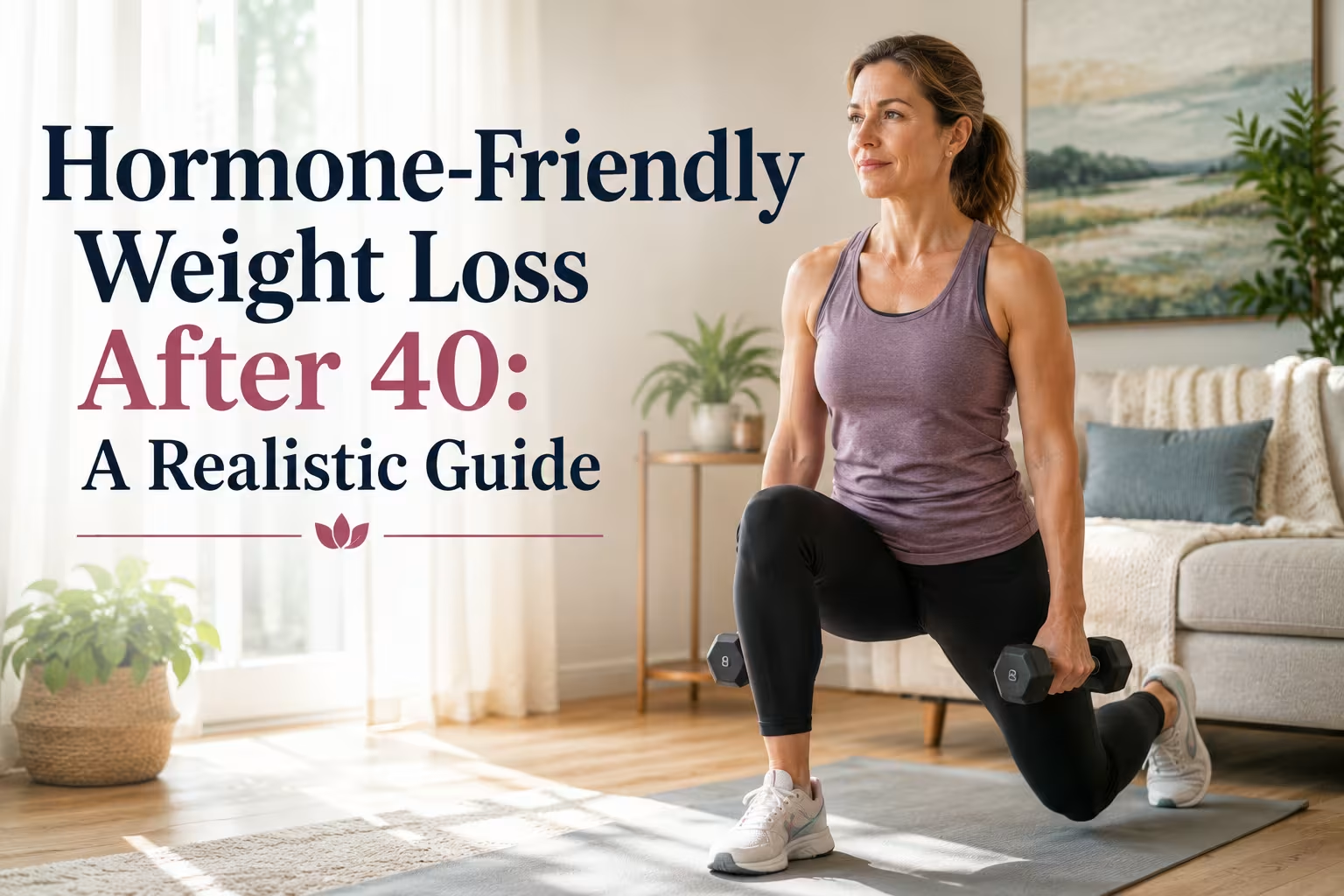
Hormone-Friendly Weight Loss After 40: A Realistic Guide
If you’re over 40 and the approach that used to keep your weight steady isn’t working the same way anymore, you’ve probably already searched for an explanation — and landed on a lot of content promising to “balance your hormones.” Some of that content is genuinely useful. A lot of it oversimplifies real biology into a sales pitch for supplements, hormone testing, or a specific clinic.
This guide is meant to give you the honest version. “Hormone-friendly” is a real, useful way to describe an approach to weight management after 40 — as long as it means what it should: a sustainable pattern of eating, movement, sleep, and stress management that supports your body through a genuine hormonal transition. It shouldn’t mean a claim that any food, supplement, or program can directly “balance,” “reset,” or “fix” your hormones. Nothing currently does that, and anything claiming otherwise is overselling what the science actually shows.
Your body isn’t broken. It’s navigating real physiological change, and it deserves a strategy built for that — not a fight against it.
Why Weight Loss Can Feel Different After 40
It’s worth separating two things that often get blended together: ordinary aging and menopause-related change. Both are real, and they overlap, but they’re not identical.
From aging alone (regardless of menopause status):
- Gradual decline in muscle mass, which lowers resting metabolic rate somewhat over time
- Naturally decreasing activity levels for many people, as life gets busier
- Accumulated life stress and changing sleep patterns
More specifically tied to the menopause transition:
- Declining estrogen, associated with a shift in fat storage toward the abdomen
- An acceleration of muscle loss around the transition itself, beyond typical age-related decline
- Sleep disruption from hot flashes and night sweats
- Changes in appetite regulation
Not every pound gained after 40 is “because of menopause” — aging plays a substantial, independent role too. But declining estrogen specifically does appear to influence where fat is stored and how quickly muscle is lost, which is why the two deserve to be discussed separately rather than lumped into one vague “hormones did this” explanation.
How Hormones Actually Relate to Weight After 40
Here’s a clearer picture of what’s actually established, hormone by hormone.
Estrogen. As estrogen declines during perimenopause and menopause, research links this to a shift in fat distribution toward the abdomen and to accelerated muscle loss. A large 2019 meta-analysis of data from over a million people found menopause associated with an increase in body fat and waist circumference beyond what age alone would predict. This is real and specific — but it’s a shift in where fat goes and how much muscle is retained, not a statement that estrogen alone determines your weight.
Insulin. Insulin regulates blood sugar, not simply “fat storage” in the oversimplified way it’s often described. Declining estrogen is associated with reduced insulin sensitivity in some research, which is relevant to metabolic health — but insulin isn’t a switch that turns fat storage on or off based on what you eat in a single meal.
Cortisol. Chronic stress can affect cortisol patterns, appetite, and sleep — all of which matter for weight management. But cortisol is not a reliable universal explanation for weight gain, and “high cortisol” isn’t something most people can meaningfully self-diagnose or fix with a supplement. Our full article on stress and menopause weight gain covers this in more depth.
Thyroid hormones. Thyroid function genuinely affects metabolism, and thyroid conditions become somewhat more common with age. This is a real medical consideration — if you have symptoms like persistent fatigue, unexplained weight change, or temperature sensitivity beyond typical menopause symptoms, thyroid function is worth discussing with your doctor. It’s a distinct medical issue requiring evaluation, not something to self-manage with diet alone.
Appetite-regulating signals. Hormones like leptin and ghrelin play a role in hunger and fullness, and research suggests menopause-related hormonal changes may influence them — though the human research on the size and consistency of this effect is still developing, and it varies between individuals.
The honest summary: hormonal change is real and relevant, but it’s one contributor working alongside aging, muscle mass, activity, sleep, stress, and genetics — not a single dial that, once turned correctly, resolves everything else.
Can Hormone Therapy Help With Weight Loss?
This deserves a direct, current answer, because it’s one of the most common questions behind searches like this one.
Menopausal hormone therapy (MHT) is not a primary weight-loss treatment, and it isn’t prescribed for that purpose. Its established, evidence-based uses are for managing menopause symptoms — vasomotor symptoms like hot flashes, genitourinary symptoms, and prevention of early postmenopausal bone loss.
That said, the research picture here has genuinely developed recently, and it’s worth being current rather than dismissive: some 2022–2026 research suggests MHT may help preserve lean muscle mass and influence fat redistribution in postmenopausal women, and newer observational studies (2024–2026) have found that women using MHT alongside GLP-1 obesity medications like tirzepatide or semaglutide saw somewhat greater weight loss than those using those medications alone. This is a genuinely emerging area — the evidence base is still described by researchers as small and methodologically limited, and these findings involve MHT used alongside other treatments, not MHT as a standalone weight-loss approach.
What this means practically: hormone therapy is a legitimate medical decision for managing menopause symptoms, and if you’re already considering it for that reason, its potential body-composition effects are a reasonable thing to discuss with your doctor. It is not something to start specifically to lose weight, and any provider suggesting otherwise is going beyond current evidence-based guidance. This is a conversation for you and a qualified healthcare provider, based on your full health picture — not a decision to make from a blog post, including this one.
10 Hormone-Friendly Weight Loss Strategies After 40
These are fundamentals, not hacks — which is exactly why they work better than anything promising a shortcut.
1. Prioritize protein. Protein supports muscle maintenance and fullness, both increasingly relevant as muscle mass declines with age. There’s no single number that fits everyone — see our menopause nutrition guide for general reference ranges.
2. Eat more fiber-rich foods. Vegetables, fruit, beans, lentils, whole grains, nuts, and seeds support fullness and steadier blood sugar.
3. Build balanced meals. Combining protein, fiber-rich carbohydrates, vegetables, and healthy fats at most meals tends to work better than any single “rule” about what to avoid.
4. Strength train regularly. This is arguably the single highest-leverage habit on this list, given accelerated muscle loss during the menopause transition. See our strength training guide for women over 50 for a beginner routine.
5. Walk more. Regular walking supports overall activity and cardiovascular health without requiring intense exercise.
6. Protect your sleep. Menopause-related sleep disruption affects appetite, energy, and consistency with everything else on this list — our full guide to menopause and sleep covers this connection.
7. Manage chronic stress. Not to “lower cortisol and burn belly fat” — that’s an oversold claim — but because chronic stress affects sleep, appetite, and consistency in ways that make everything else harder to sustain.
8. Reduce excess added sugar, without eliminating it entirely. If cravings are a significant obstacle, our dedicated guide to sugar cravings after 40 offers a full, practical framework.
9. Stay hydrated. A small, easy piece of the puzzle — see our hydration guide for women over 40.
10. Choose a sustainable eating pattern over a “perfect” one. The best approach is the one you can actually maintain for years, not the most aggressive one you can tolerate for a few weeks.
What a Hormone-Friendly Day of Eating Could Look Like
This is an illustrative example, not a calorie-controlled meal plan:
- Morning: Water, a balanced breakfast with protein (eggs, Greek yogurt) and fruit or vegetables
- Lunch: Protein, vegetables, a fiber-rich carbohydrate, and a healthy fat — a grain bowl or salad with grilled chicken works well
- Afternoon: An optional balanced snack if genuinely hungry — see our healthy snacks for women over 40
- Dinner: Protein, vegetables, an appropriate carbohydrate portion, healthy fat
- Evening: A relaxing wind-down routine, without mindless snacking driven by habit rather than hunger
For a full week of ready-to-use meals built on this same structure, see our 7-day menopause meal plan.
Why Belly Fat Can Increase After 40
As covered in our full guide to menopause belly fat, abdominal fat gain during this life stage stems from a combination of declining estrogen (linked to a shift in fat storage toward the abdomen), age-related muscle loss, and overall energy balance — not any single food, supplement, or hormone acting alone. Spot reduction isn’t realistic for any part of the body, abdomen included; the strategies that support overall body composition (protein, strength training, sustainable nutrition, sleep) are the same ones that help here.
Why Muscle Matters More After 40
This is one of the most consequential, underappreciated pieces of this entire topic. Research indicates women in the late menopause transition and postmenopause have meaningfully lower lean muscle mass than they did in early perimenopause — a decline connected to both aging and estrogen changes. Since muscle tissue is more metabolically active than fat tissue, preserving it matters for resting metabolism, functional strength, and long-term health — not just appearance.
Success shouldn’t be measured by the scale alone. Waist circumference, strength gains, energy levels, sleep quality, and how your clothes fit all tell a more complete story than weight in isolation — without needing to become another number to obsessively track.
7 Weight-Loss Mistakes Women Over 40 Should Avoid
- Extreme calorie restriction — hard to sustain and can accelerate the muscle loss you’re trying to prevent
- Excessive cardio without strength training — doesn’t address muscle preservation
- Skipping meals purely to cut calories — often backfires through increased hunger and overeating later
- Eliminating carbohydrates unnecessarily — rarely required and often unsustainable
- Chasing hormone-balancing supplements instead of the fundamentals covered above
- Relying on detoxes or cleanses — not supported by evidence and unnecessary for weight management
- Expecting rapid results — sustainable body composition change happens over months, not days
Do Hormone-Balancing Foods Really Work?
This deserves a direct fact-check, since it’s one of the most common claims in this space. There’s an important difference between:
- Foods that support overall health — vegetables, fruit, legumes, whole grains, nuts, seeds, fish, olive oil, and adequate protein all contribute to a healthy dietary pattern with real, well-established benefits
- Foods marketed as directly “balancing hormones” — a claim that isn’t supported by strong evidence for any specific food
The foods in the first category are genuinely good choices — but the reason to eat them is that they support overall health, satiety, and nutrient needs, not because they “reset estrogen” or “flush” anything. If an article or product claims a specific food directly rebalances your hormones, that’s a marketing claim outrunning the science.
Do You Need Hormone-Balancing Supplements?
Supplements marketed for cortisol, estrogen, progesterone, or “metabolism support” shouldn’t be assumed to work simply because they’re being sold for this purpose — evidence for most of these products is limited or absent. This isn’t a blanket statement that all supplements are useless; it’s a reminder to be skeptical of specific hormone-balancing claims and to talk to a doctor or pharmacist before adding anything, especially if you take medications or have a health condition. Supplements are not a substitute for the fundamentals covered throughout this article.
Stress and Weight
Chronic stress affects sleep, appetite, food choices, and consistency with exercise — real pathways that matter for weight management, without stress being the single explanation for weight gain. Our complete article on stress and menopause weight gain covers the nuanced, evidence-based picture, including where popular “cortisol causes belly fat” claims oversimplify the science.
Why Sleep Is Part of a Hormone-Friendly Weight-Loss Plan
Sleep disruption — common during menopause due to night sweats and hormonal changes — is linked to increased hunger, more snacking, and reduced next-day activity, according to Mayo Clinic. This makes consistent sleep one of the more genuinely impactful, if less exciting, pieces of a sustainable approach. See our full guide to menopause and sleep for practical strategies.
How Hydration Fits Into Weight Management After 40
Adequate hydration supports energy, digestion, and can help distinguish thirst from hunger — a small, easy piece of the picture. There’s no evidence that drinking excessive water accelerates fat loss; more isn’t better beyond meeting your actual needs. See our practical hydration guide for women over 40 for realistic daily targets.
What If Sugar Cravings Are Your Biggest Problem?
If sugar cravings feel like the main obstacle, they’re usually driven by a combination of under-eating earlier in the day, inadequate sleep, stress, habit, and food environment — not a hormone “forcing” you to crave sugar. Our dedicated guide to sugar cravings after 40 offers a full, practical framework, including a step-by-step approach for the moment a craving hits.
Is Intermittent Fasting Hormone-Friendly After 40?
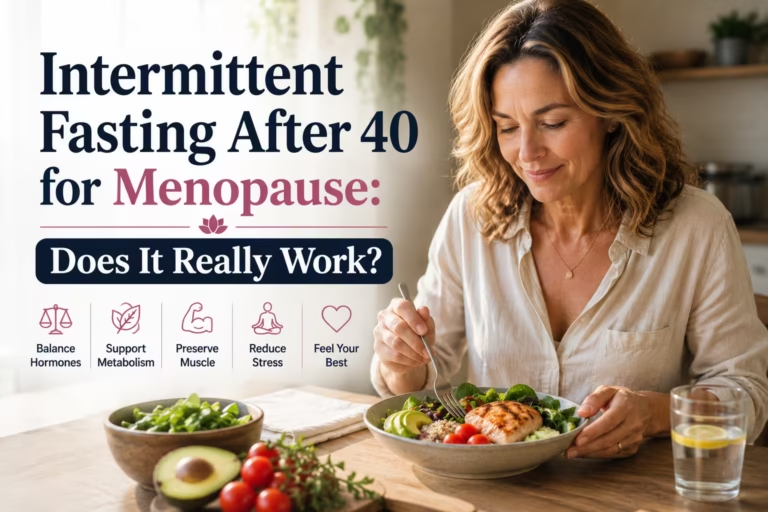
It can fit within a sustainable approach for some women, but it isn’t automatically the “hormone-friendly” default, and it isn’t required. Time-restricted eating may help some people naturally eat fewer calories, but it requires more intentional attention to protein and nutrient adequacy within a shorter window — particularly important given the muscle-preservation priority covered above. Individual tolerance varies significantly. See our full guide to intermittent fasting after 40 for an honest look at what the evidence does and doesn’t show, specifically for menopausal women.
A Sustainable 30-Day Weight-Loss Framework for Women Over 40
This is a habit-building framework, not a promise of a specific amount of weight loss.
Week 1 — Build the Foundation: Balanced meals, consistent hydration, a steady sleep routine, and basic daily movement.
Week 2 — Prioritize Protein and Fiber: Improve meal composition and nutrient density using the strategies above.
Week 3 — Add Strength and Daily Movement: Introduce resistance training alongside walking, with attention to recovery.
Week 4 — Improve Consistency: Layer in stress management and sleep consistency, and build a realistic plan for the months ahead rather than treating 30 days as an endpoint.
For a more detailed, day-by-day version of this same structure, see our 30-day menopause reset.
If You’re Over 40, Start With These 5 Things
If this all feels like a lot, start here:
- Build balanced meals (protein + fiber + vegetables + healthy fat)
- Eat enough protein
- Strength train, even just twice a week
- Walk and move consistently
- Protect your sleep and manage stress where you can
When to See a Healthcare Professional
Reach out to a doctor for evaluation if you notice:
- Unexplained or rapid weight changes
- Persistent fatigue that isn’t improving with better sleep
- Major changes in appetite
- Symptoms suggesting a thyroid problem (temperature sensitivity, hair or skin changes, unexplained weight shifts)
- Significant sleep problems
- Severe menopause symptoms affecting daily life
- Any other unusual or concerning symptoms
This isn’t a diagnostic tool, and it isn’t a substitute for individualized care — it’s a starting point for a conversation worth having.
A Structured Approach, If You Want One
Everything in this guide can be applied gradually, on your own terms. If you’d rather follow a structured program bringing nutrition, movement, sleep, and stress-supporting habits together into one plan, that’s what the Menopause Weight Loss System is designed around — a practical, step-by-step approach for this specific life stage.
FAQ
What is hormone-friendly weight loss? It refers to a sustainable approach to nutrition, movement, sleep, and stress management that accounts for the real hormonal changes of midlife and menopause — not a claim that any food or program can directly balance or reset your hormones.
How can I lose weight after 40? The fundamentals matter most: adequate protein, regular strength training, consistent sleep, manageable stress, and a sustainable eating pattern you can maintain long-term rather than an aggressive short-term diet.
Why am I gaining weight during menopause? A combination of factors, typically: declining estrogen affecting fat distribution and muscle mass, age-related changes independent of menopause, sleep disruption, and shifts in activity and appetite.
Can declining estrogen affect where my body stores fat? Yes — this is one of the better-supported hormonal connections in this article. Declining estrogen is associated with a shift in fat storage toward the abdomen.
Does hormone replacement therapy cause weight loss? No, not on its own — MHT is prescribed for menopause symptom management, not as a weight-loss treatment. Emerging research suggests it may support muscle preservation and enhance the effect of certain weight-loss medications when used together, but this is still a developing area of research, not a standalone weight-loss solution.
What foods support healthy weight management after 40? A pattern built around protein, fiber-rich carbohydrates, vegetables and fruit, and healthy fats — see our menopause nutrition guide for specifics. No single food “balances hormones.”
How much protein do women over 40 need? General guidance suggests many women benefit from roughly 1.0–1.2 grams per kilogram of body weight daily, though individual needs vary — see our nutrition guide for more detail.
Is strength training important during menopause? Yes — it’s one of the most evidence-supported tools for counteracting the muscle loss that accelerates during this transition, which directly affects metabolism and long-term health.
Can stress make menopause weight management harder? It can, mainly through effects on sleep, appetite, and consistency — though it’s one factor among several, not the sole explanation.
Does poor sleep contribute to weight gain? Yes — poor sleep is linked to increased hunger, more snacking, and reduced next-day activity, all of which affect weight management.
Is intermittent fasting appropriate after 40? It can be for some women, with careful attention to protein and nutrient adequacy, but it isn’t required or automatically superior to other sustainable eating patterns.
How long does healthy menopause weight loss take? There’s no universal timeline. Sustainable body composition change is typically gradual, often over several months of consistent habits rather than weeks.
Sources & Further Reading
Mayo Clinic — “The reality of menopause weight gain” · 2019 meta-analysis on menopause and body composition (over 1 million participants) · 2026 clinical review on menopausal hormone therapy and weight management (Obesity Pillars) · Research on MHT combined with GLP-1 receptor agonists (2024–2026 observational studies) · Peer-reviewed research on estrogen, insulin sensitivity, and lean body mass in postmenopausal women
This article provides general health and wellness information and is not a substitute for individualized medical advice. Talk to your doctor about hormone therapy, thyroid symptoms, or any significant or unexplained health changes.



One Comment