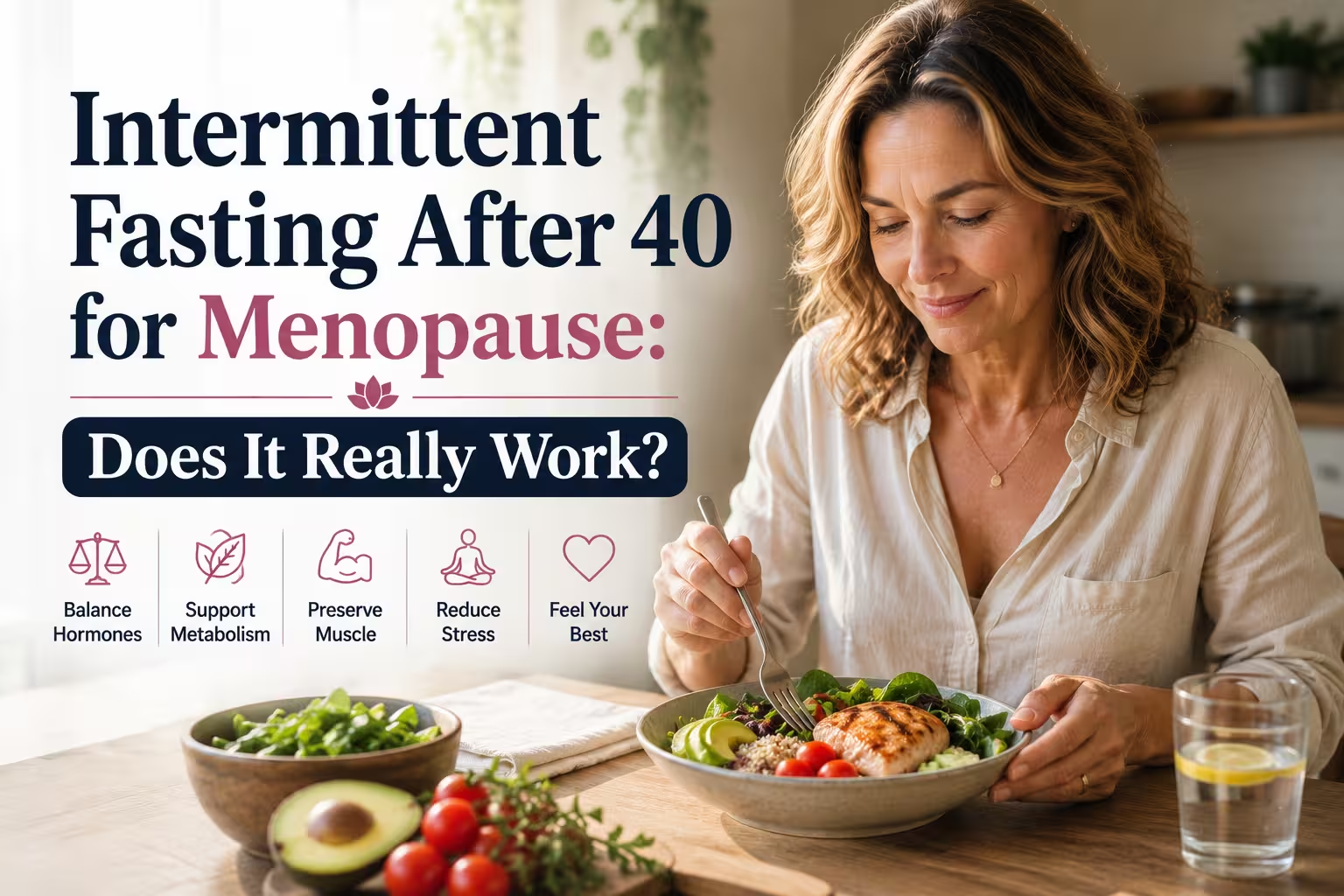
Intermittent Fasting After 40 for Menopause: Does It Really Work?
If you’ve searched for whether intermittent fasting works during menopause, you’ve probably found a mix of enthusiastic claims and vague reassurances — “it can help balance your hormones,” “it resets your metabolism,” “studies show it works.” Some of that is oversimplified. Some of it skips over an important detail: much of the research behind these claims wasn’t actually done on menopausal women.
This guide is meant to fill that gap honestly. Intermittent fasting is genuinely worth understanding as an option — it’s not a fad to dismiss out of hand, and it’s not a miracle either. It’s an eating schedule, and like any eating pattern, whether it helps you depends on how it fits your body, your life, and the fundamentals (protein, fiber, sleep, movement) that matter regardless of when you eat.
What Is Intermittent Fasting, Actually?
Intermittent fasting (IF) is an umbrella term for eating patterns built around when you eat rather than strictly what you eat. The most common approach for general weight management is time-restricted eating (TRE) — compressing your eating into a specific daily window and fasting for the rest.
Common schedules include:
- 12:12 — a 12-hour eating window, 12-hour fast (close to a typical overnight fast for many people already)
- 14:10 — a 14-hour fast, 10-hour eating window
- 16:8 — a 16-hour fast, 8-hour eating window, probably the most widely discussed version
Other approaches, like 5:2 fasting (eating normally 5 days a week, significantly reducing calories on 2 non-consecutive days) or alternate-day fasting, work differently but share the same underlying idea: structuring when you eat rather than only counting calories throughout the day.
Intermittent fasting isn’t inherently superior to conventional calorie management — for many people, restricting the eating window naturally leads to eating less overall, which is one reason it can support weight loss. But that’s a behavioral effect (fewer opportunities to eat), not evidence of a special metabolic advantage. No single schedule is “correct” — individual tolerance, health status, and lifestyle matter more than picking the most aggressive option.
Why Intermittent Fasting Can Feel Different During Menopause
Menopause doesn’t make intermittent fasting automatically unsafe, and it doesn’t make it automatically beneficial either. What it does is change the context you’re trying it in:
- Muscle mass naturally declines with age and can decline faster around the menopause transition, making muscle preservation a bigger consideration than it might have been in your 20s or 30s
- Sleep disruption from hot flashes and night sweats is common, and eating patterns can interact with sleep in ways worth paying attention to (more below)
- Appetite and hunger cues can shift during this transition
- Stress is often elevated during this life stage for reasons well beyond diet — see our dedicated article on stress and menopause weight gain
- Bone health becomes a more active consideration as estrogen declines
- Cardiovascular and metabolic health considerations shift with age, independent of fasting specifically
Current menopause-specific health guidance generally emphasizes sustainable nutrition, regular physical activity, sleep, and individualized symptom management — not one universal diet approach. Intermittent fasting can fit within that framework for some women; it isn’t a required or default component of it.
Does Intermittent Fasting Work for Menopause Weight Loss?
Short, honest answer: it can support weight loss, mainly by reducing overall calorie intake — but the evidence specifically involving menopausal women is more limited than most articles on this topic let on.
Here’s what’s more solidly established:
- When total calorie intake is matched, intermittent fasting and conventional continuous calorie restriction tend to produce similar weight-loss results in research — IF isn’t shown to have some unique metabolic advantage over calorie reduction achieved another way.
- For some people, a restricted eating window makes it easier to naturally eat fewer calories without deliberately tracking every bite, which can improve adherence — this is a genuine, practical advantage for the right person.
Here’s what’s more limited or overstated:
- A number of widely cited intermittent fasting studies have specifically excluded perimenopausal women or restricted postmenopausal participants to those on stable hormone therapy, precisely because the hormonal transition adds variables researchers wanted to control for. This means some of the research commonly cited as “proof it works for menopause” wasn’t actually testing the group experiencing active hormonal transition.
- Claims that fasting improves menopause symptoms specifically (fewer hot flashes, better mood) are based on limited, mixed evidence — some women report feeling better, others report worse fatigue or irritability, and there isn’t a reliable way to predict which you’ll be in advance.
The realistic takeaway: intermittent fasting is a legitimate tool that can support weight management for some women during menopause, largely through the same mechanism as any approach that helps you eat fewer calories consistently — not through a menopause-specific metabolic effect that current research clearly demonstrates.
Does Intermittent Fasting Balance Hormones During Menopause?
This is one of the most common — and most overstated — claims in this space, so it’s worth addressing directly: no credible evidence supports the idea that intermittent fasting “balances” female reproductive hormones during menopause.
To be specific about what’s actually being discussed when people use the word “hormones” here:
- Estrogen and progesterone — the hormones central to the menopause transition — aren’t meaningfully changed by an eating schedule. Their decline during menopause is a natural, ovarian-driven process that fasting doesn’t reverse or “balance.”
- Insulin — this is where there’s more legitimate evidence. Time-restricted eating has shown improvements in insulin sensitivity in some studies, which is relevant to metabolic health, though effect sizes vary and aren’t unique to fasting versus other approaches that reduce calorie intake.
- Cortisol — fasting itself is a mild physiological stressor, and for some individuals, especially with longer fasting windows, this can transiently affect cortisol patterns. This doesn’t automatically mean fasting is harmful, but it’s a reason to be cautious about long or aggressive fasting windows if you’re already managing significant stress (see our stress and menopause weight gain guide for the fuller picture on cortisol’s real, more limited role).
If a product or article claims fasting will “reset your hormones” or “balance estrogen,” that’s marketing language outrunning the science, not an established medical claim.
Can Intermittent Fasting Reduce Menopause Belly Fat?
Fat loss happens through overall energy balance — your body can’t be instructed to burn fat from one specific area based on when you eat, including the abdomen. As covered in our full guide to menopause belly fat, abdominal fat changes during menopause are driven by a combination of declining estrogen, age-related muscle loss, and overall energy balance — not by any single dietary strategy, fasting included.
What intermittent fasting can do, if it helps you sustain a moderate calorie deficit, is contribute to overall fat loss — which, over time, tends to include some reduction in abdominal fat as part of general body composition change. That’s a meaningfully different (and more accurate) claim than “fasting targets belly fat,” and it depends entirely on maintaining adequate protein intake and staying physically active — particularly resistance training — to preserve muscle while losing fat.
How to Get Enough Protein While Intermittent Fasting After 40
This is arguably the single most important practical consideration in this entire article, and it’s the piece most fasting content glosses over.
Research combining intermittent fasting with resistance training generally shows lean body mass can be maintained when protein intake is adequate — but a shorter eating window means you have fewer meals to fit that protein into, which takes more intention than eating protein spread across a full day.
Practical strategies:
- Prioritize a protein source at the start of your eating window, not just at the end
- Aim to spread protein across however many meals fit in your window, rather than loading it all into one
- Good protein-dense options for compressed eating windows: eggs, Greek yogurt, cottage cheese, fish, poultry, lean meats, beans, lentils, tofu and other soy foods — see our high-protein breakfast ideas for options that work well as a first meal
- If you’re combining fasting with strength training (recommended — see below), pay particular attention to getting protein in reasonably close to your training session
There’s no single protein number that fits every woman — individual needs depend on body size, activity level, and health status, and our menopause nutrition guide covers general reference ranges in more depth. Women with kidney disease or other conditions affecting protein metabolism should get individualized guidance from a doctor or dietitian rather than following general targets.
Fiber and Micronutrients: The Overlooked Challenge
A shorter eating window can make it genuinely harder to fit in adequate fiber, calcium, vitamin D, iron (where relevant), and produce variety — simply because there are fewer meals and less total volume of food time to work with. This is rarely mentioned in fasting content that focuses only on the weight-loss angle.
Practical strategies:
- Build vegetables into every meal within your eating window, rather than treating them as optional
- Choose higher-fiber carbohydrate sources (legumes, whole grains, fruit with skin) over refined versions to make the most of a smaller number of meals
- Include a calcium source (dairy, fortified plant milk, leafy greens, canned fish with bones) at least once daily — bone health is a legitimate consideration during menopause, and short-term research suggests fasting doesn’t clearly harm bone density, though long-term data specifically in postmenopausal women remains limited
- If you’re routinely struggling to fit in enough nutrient variety within your window, that’s a sign the window may be too short for your needs, not a problem to push through
Fasting Isn’t a License to Eat However You Want
It’s worth saying plainly: intermittent fasting controls when you eat, not automatically what you eat. It’s entirely possible to fast and still eat a nutritionally poor diet during your eating window — and doing so tends to undercut most of the potential benefits.
The fundamentals still matter within whatever schedule you choose: nutrient density, adequate protein, vegetables and fruit, whole grains and legumes, healthy fats, reasonable portions, and hydration (see our hydration guide for women over 40 — this matters even more during a fasting window, since water, black coffee, and plain tea are generally considered fine during a fast and support staying comfortable).
A Gentle Intermittent Fasting Approach for Women Over 40
If you’re interested in trying time-restricted eating, there’s no reason to start with an aggressive schedule.
A reasonable starting approach:
- Start with a 12:12 window — essentially just closing the kitchen after dinner and not eating again until a similar time the next day. For many people, this is close to their current pattern already.
- If that feels comfortable after a week or two, and you’re interested in extending it, move to 14:10.
- Only consider 16:8 or a more restrictive schedule if the earlier steps felt genuinely comfortable — not simply tolerable.
As you adjust, pay attention to:
- Hunger levels — manageable versus genuinely distressing
- Energy throughout the day
- Sleep quality
- Mood
- Exercise performance
- Whether you’re able to comfortably fit in adequate protein, fiber, and nutrient variety within your window
If any of these consistently move in the wrong direction, that’s meaningful information — not something to push through. This is general educational information, not individualized medical advice; your own starting point should factor in your health history and how you’re actually feeling, ideally with input from your doctor if you have any underlying health conditions.
What a Day of Eating Could Look Like
Using a 14:10 window (roughly 10am–8pm) as an example:
| Time | Meal | Focus |
|---|---|---|
| ~10:00 AM | First meal — e.g., Greek yogurt with berries and nuts, or eggs with vegetables | Protein-forward to start the window well |
| ~1:00 PM | Lunch — e.g., grilled chicken salad with chickpeas and olive oil dressing | Protein + fiber + healthy fat |
| ~4:00 PM | Optional snack, depending on hunger and schedule — e.g., cottage cheese with fruit | Bridges to dinner if needed |
| ~7:30 PM | Dinner — e.g., baked salmon, roasted vegetables, quinoa | Rounds out the day’s protein and nutrient needs |
| Throughout | Water, black coffee, plain tea | Hydration continues through the fasting window too |
This is one illustrative example, not a required structure — the timing and specific foods should reflect your own schedule and preferences. Our 7-day menopause meal plan offers more meal ideas that can be adapted into a compressed eating window.
Exercise and Intermittent Fasting
Fasting and exercise can coexist, but muscle preservation deserves particular attention given the age-related muscle loss already at play during menopause.
- Walking works well at any point relative to your eating window and doesn’t require special timing considerations
- Resistance/strength training is where protein timing matters most — research suggests lean mass is generally maintained when resistance training is combined with adequate total protein intake, even within a fasting structure. See our strength training guide for women over 50 for a starting routine.
- Higher-intensity exercise during an extended fasted state can feel harder for some people — if you notice reduced performance or excessive fatigue training fasted, shifting your workout to fall within (or closer to) your eating window is a reasonable adjustment, not a failure
- Recovery matters as much as the workout itself — adequate total calories and protein across your eating window support recovery regardless of when you train
Combining fasting with intense exercise while also significantly restricting calories is a combination worth avoiding — that stacks two demanding physiological stressors at once, which tends to backfire rather than accelerate results.
Can Intermittent Fasting Affect Sleep During Menopause?
It can, in both directions. Some women find that not eating close to bedtime reduces reflux and improves sleep; others find that hunger, especially with a compressed or late eating window, makes falling asleep harder. Since sleep disruption from hot flashes and night sweats is already common during menopause (see our full guide to menopause and sleep), it’s worth watching closely.
A useful test: if your fasting schedule consistently interferes with your sleep — more trouble falling asleep, more middle-of-the-night waking tied to hunger — that’s a signal the schedule isn’t the right fit, at least not in its current form. Adjusting your eating window earlier, or extending it slightly, is a reasonable response.
Is Fasting Another Source of Stress?
For some women, adhering to a strict eating window becomes one more thing to manage and monitor during an already demanding life stage — which can add mental load rather than reduce it. As covered in our article on stress and menopause weight gain, sustainable habits generally outperform rigid ones over the long term, partly because rigid rules that create stress can undermine sleep, appetite regulation, and consistency in ways that offset any benefit from the eating pattern itself.
If tracking your eating window closely feels like a source of anxiety rather than a helpful structure, that’s worth taking seriously — a less structured, but genuinely sustainable, approach to eating may serve you better.
Who Should Avoid or Discuss Intermittent Fasting With a Healthcare Professional?
Intermittent fasting isn’t automatically appropriate for everyone. It’s worth discussing individualized guidance with a doctor if you:
- Have diabetes or take glucose-lowering medications, where meal timing directly affects medication safety
- Have a history of an eating disorder or disordered eating patterns
- Take medications that require food or a specific schedule
- Have a medical condition that requires regular meals or steady nutrient intake
- Are significantly underweight or have specific nutrient deficiencies
- Have any other medical condition that affects nutrition or metabolism
This list isn’t exhaustive, and it isn’t a diagnosis of whether fasting is right or wrong for you specifically — it’s a starting point for a conversation with a healthcare professional who knows your health history.
9 Intermittent Fasting Mistakes Women Over 40 Should Avoid
- Starting with an unnecessarily long fasting window. Jumping straight to 16:8 or longer isn’t necessary — a gradual approach is easier to evaluate and sustain.
- Not eating enough nutritious food overall. A compressed window isn’t an excuse to eat less food quality-wise — the fundamentals still apply.
- Neglecting protein. This is the most consequential mistake given age-related muscle loss — see the dedicated section above.
- Ignoring fiber. Fewer meals shouldn’t mean less produce and whole-food variety.
- Eating very large meals because of the restricted window. Overcompensating at meals can lead to digestive discomfort and doesn’t reflect the moderate, sustainable approach that tends to work best.
- Treating fasting as permission to eat mostly processed foods. Food quality still matters within any eating pattern.
- Ignoring sleep disruption caused by the schedule. If fasting is consistently interfering with sleep, the schedule needs adjusting.
- Skipping strength training. Without resistance training, preserving muscle during any calorie-reducing approach — fasting included — is harder.
- Continuing a schedule that makes you feel consistently unwell. Persistent fatigue, irritability, or other negative symptoms are a signal to adjust or stop, not push through.
Intermittent Fasting vs. Other Approaches
| Approach | Potential advantages | Potential challenges | Who may prefer it |
|---|---|---|---|
| 12:12 time-restricted eating | Gentle, close to many people’s existing pattern, easy entry point | Minimal structural change, so limited effect on its own for some people | Women new to structured eating windows |
| 14:10 | More defined structure while still moderate | Requires somewhat more planning around meal timing | Women who found 12:12 comfortable and want a bit more structure |
| 16:8 | Meaningful calorie-window compression, which some find easier for portion control | Can be harder to fit in adequate protein/fiber; may not suit active mornings or evening social eating | Women who prefer fewer, larger meals and don’t struggle to meet nutrient needs in a shorter window |
| Traditional balanced meals (no fasting) | Maximum flexibility for meal timing and social eating; simpler to hit nutrient targets across more meals | Requires separate attention to portion awareness | Women who find rigid schedules stressful or who eat socially throughout the day |
| Mediterranean-style eating | Strong general evidence base for overall health, not weight-loss-specific | Not primarily designed as a weight-loss protocol on its own | Women prioritizing long-term cardiovascular and metabolic health alongside weight management |
No approach here is universally superior — the “best” one is the one that fits your schedule, supports your nutrient needs, and you can sustain without added stress.
A Structured Approach, If You Want One
Everything in this guide can be applied on your own, whichever eating pattern you choose. If you’d rather follow a structured program that brings nutrition, movement, sleep, and stress-supporting habits together — with or without a time-restricted eating component — that’s what the Menopause Weight Loss System is designed around, as one option among several ways to build a sustainable plan for this life stage.
FAQ
Is intermittent fasting safe during menopause? For many healthy women, yes, when approached gradually and with attention to protein and nutrient needs — but it isn’t automatically appropriate for everyone. Women with diabetes, a history of disordered eating, or certain other health conditions should talk to a doctor first.
Does intermittent fasting help with menopause weight loss? It can support weight loss, primarily by making it easier for some people to eat fewer overall calories — not through a unique menopause-specific metabolic effect. Evidence directly studying menopausal women specifically remains more limited than general fasting research.
What is the best fasting schedule for women over 40? There isn’t one universally best schedule. A gentler starting point (12:12 or 14:10) tends to be easier to evaluate honestly than jumping straight to a more restrictive window.
Is 16:8 fasting appropriate during menopause? It can be for some women, but it requires more intentional planning to fit in adequate protein and nutrient variety within a shorter window — it’s not automatically the “best” option just because it’s the most commonly discussed.
Does fasting reduce menopause belly fat? Not directly or selectively — fat loss happens through overall energy balance, and abdominal fat responds to the same general strategies (protein, movement, sustainable calorie balance) as fat loss anywhere else in the body. See our menopause belly fat guide.
Does intermittent fasting affect estrogen? There’s no credible evidence that intermittent fasting meaningfully changes estrogen levels or “balances” the hormonal changes of menopause, which are driven by ovarian function, not eating schedule.
Can intermittent fasting cause muscle loss after 40? It can, if protein intake is inadequate and resistance training isn’t part of the picture — but research combining fasting with sufficient protein and strength training generally shows lean muscle mass can be maintained.
What should I eat when breaking a fast? Whatever your first meal is, prioritizing protein (rather than starting with something mostly sugar or refined carbohydrate) tends to support steadier energy and fullness through the rest of your eating window.
Should women over 40 fast every day? There’s no requirement to fast daily — some women do time-restricted eating most days with flexibility on others, which can support long-term sustainability better than a rigid daily rule.
Is intermittent fasting better than traditional calorie restriction? When total calories are similar, research generally shows comparable weight-loss results between the two approaches. The main difference is behavioral — some people find a restricted window easier to stick with consistently than counting calories throughout a full day, while others find the opposite.
Sources & Further Reading
Peer-reviewed research on intermittent fasting, resistance training, and lean body mass (European Journal of Nutrition; Frontiers in Nutrition systematic review) · Mayo Clinic — “The reality of menopause weight gain” · Published clinical trial protocols on intermittent fasting and calorie restriction (noting exclusion of perimenopausal participants in some widely cited trials)
This article provides general health and wellness information and is not a substitute for individualized medical advice. If you take medication, have a chronic health condition, or have a history of disordered eating, talk to your doctor before starting intermittent fasting.